Desserts & Waffles
Chocolate Caramel Tart: Why Salted Caramel and Chocolate Pair Well
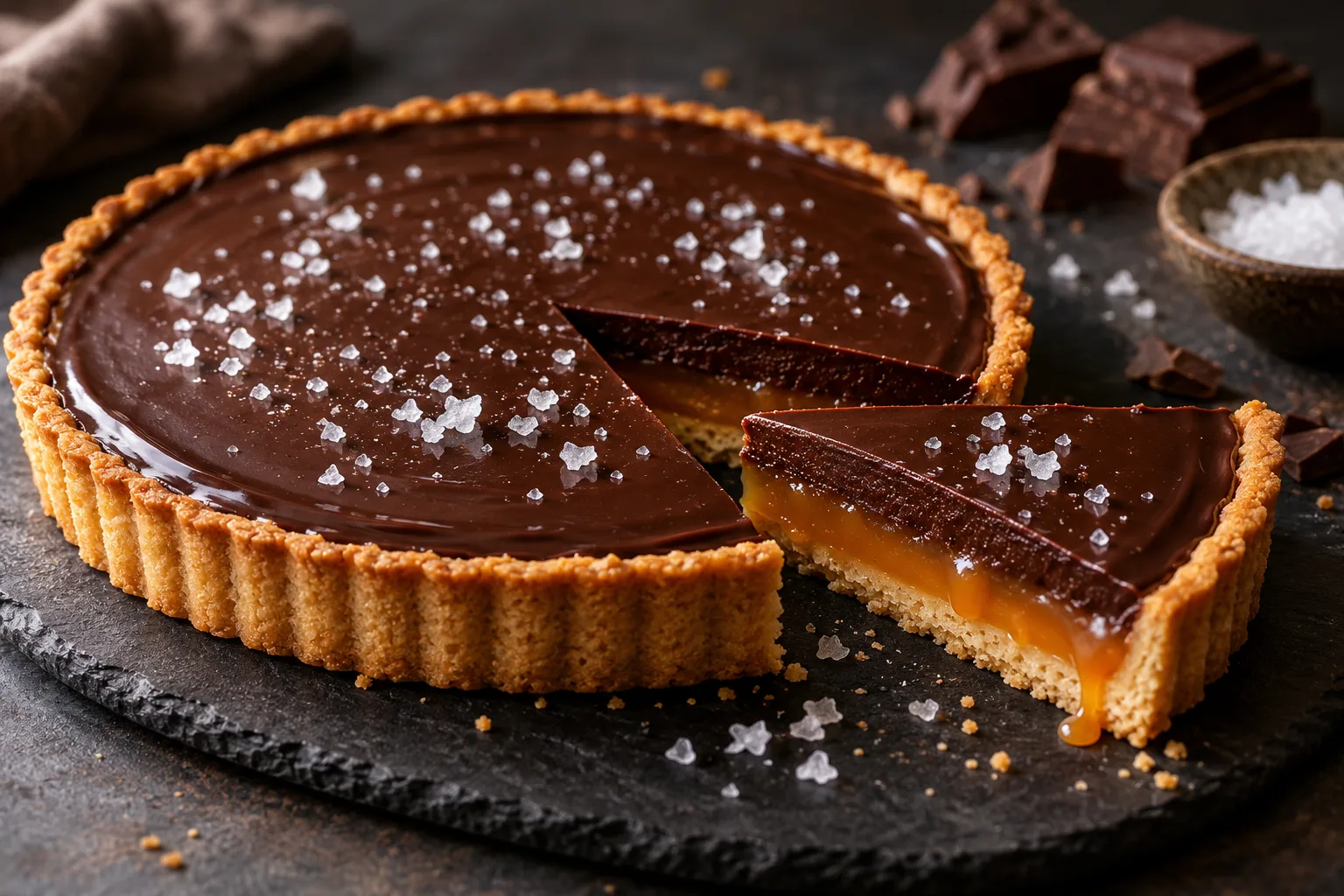
A chocolate caramel tart puts all of this on one plate. You get a crisp pastry shell, a layer of salted caramel, a silky chocolate ganache on top, and a few flakes of sea salt to finish.
By the team at Dyu Art Cafe
·
Quick Answer: Why Do Salted Caramel and Chocolate Pair So Well?
Salted caramel and chocolate pair well because salt dulls bitterness and lifts sweetness, so dark chocolate tastes smoother and caramel tastes richer. Both also share deep, toasty flavours from cooking, and the mix of creamy ganache, sticky caramel and crunchy salt keeps every bite interesting.
A chocolate caramel tart puts all of this on one plate. You get a crisp pastry shell, a layer of salted caramel, a silky chocolate ganache on top, and a few flakes of sea salt to finish.
In short:
Salt suppresses bitterness and makes sweetness stand out
Caramel and chocolate share roasted, nutty flavour notes
Soft, sticky and crunchy textures contrast in each bite
Bitter, sweet and salty balance each other so no taste takes over
What Is a Chocolate Caramel Tart?
A chocolate caramel tart is a dessert made of a baked pastry shell filled with a layer of caramel and topped with chocolate ganache. The salted version is finished with flaky sea salt on top.
A chocolate caramel tart is served chilled or at cool room temperature, cut into slim slices. One slice is usually enough, because it is rich.
You will find this dessert on menus at many cafes and home bakeries across India, from Bengaluru and Mumbai to Delhi and Pune. It has become a favourite for birthdays, dinner parties and festive gifting.
The Four Layers of the Tart
Each layer of a chocolate caramel tart has a job:

Pastry shell: a sweet, buttery, crumbly base, often called pâte sucrée, or a biscuit base for a no-bake version
Salted caramel: sugar cooked until amber, then mixed with cream, butter and salt
Chocolate ganache: chopped chocolate melted into hot cream until smooth and glossy
Flaky salt: a light sprinkle on top for crunch and little bursts of saltiness
The Science: Why Salt Makes Chocolate and Caramel Taste Better
Salt makes chocolate and caramel taste better by cutting bitterness more than it cuts sweetness. When bitterness drops, the sweetness and other pleasant flavours seem stronger.
This is not just a chef's opinion. A 1997 study in Nature by Paul Breslin and Gary Beauchamp found that salt suppresses bitter taste, and that this lets sweetness come forward. Other research on sodium salts found the same pattern: less bitterness in a bitter-sweet mix led to more perceived sweetness.
Dark chocolate is naturally bitter. In a chocolate caramel tart, a little salt in the caramel, plus a few flakes on top, softens that edge so the cocoa flavour feels rounder.
Does Salt Make Desserts Taste Sweeter?
Yes, a small amount of salt can make a dessert taste sweeter, mainly by reducing bitterness. Too much salt has the opposite effect and simply tastes salty, so balance matters.
That is why good salted caramel tastes buttery and rich rather than like seawater. The salt is there to support, not to lead.
Why Caramel and Chocolate Share Similar Flavours
Caramel and chocolate taste good together because both get their deep flavour from heat. Caramelisation and the Maillard reaction create many of the same toasty, nutty and roasted notes.
Caramelisation
Caramelisation happens when sugar is heated on its own. Table sugar starts to break down and brown at around 160 to 170°C, creating hundreds of new flavour compounds with buttery, nutty and slightly bitter notes.
The darker the caramel, the more bitter and complex it gets. A deep amber caramel stands up well to the dark chocolate in a chocolate caramel tart.
The Maillard Reaction
The Maillard reaction is a browning reaction between sugars and proteins. It happens when cocoa beans are roasted, and also when the milk proteins in cream and butter cook with sugar in a caramel sauce.
Because both ingredients in a chocolate caramel tart go through this kind of browning, their flavours overlap. That shared base is why they taste like they belong together.
Texture and Fat: The Other Reason This Tart Works
A chocolate caramel tart works because it contrasts textures as much as flavours. Crisp pastry, soft caramel, smooth ganache and crunchy salt flakes all hit at once.
Butter, cream and cocoa butter also coat the tongue. This carries flavour longer, so each bite tastes rich and lingers.
The crunch of flaky salt is important too. It breaks up the smoothness and keeps the dessert from feeling heavy.
The History of Salted Caramel: From Brittany to the World
Salted butter caramel, or caramel au beurre salé, was created by French chocolatier Henri Le Roux in Quiberon, Brittany, in 1977. Brittany is famous for its salted butter, and he wanted a sweet that reflected the region.
According to the Le Roux company, he spent about three months testing the recipe. The result was a slightly salted butter caramel with crushed walnuts, hazelnuts and almonds.
It won the award for best sweet in France at the Salon International de la Confiserie in Paris in 1980. In 1981, Le Roux registered the trademark CBS, short for Caramel au Beurre Salé.
How Salted Caramel Became Popular Worldwide
Salted caramel slowly spread from Brittany to the rest of France, and then the world, through the 1990s and 2000s. French pastry chef Pierre Hermé helped make it famous in high-end pastry, including in his macarons.
By the 2010s, it was everywhere, from ice cream to lattes. Pairing it with chocolate in brownies, bars and the chocolate caramel tart was a natural next step.
Best Chocolate for a Chocolate Caramel Tart
The best chocolate for a chocolate caramel tart is a dark chocolate with about 55 to 70 percent cocoa. It has enough bitterness to balance the sweet caramel without tasting harsh.
Here is a quick guide:
Chocolate type | Cocoa % | How it tastes in the tart |
|---|---|---|
Milk chocolate | 30–40% | Very sweet, mild, best for kids |
Semi-sweet / dark | 50–60% | Balanced and crowd-pleasing |
Bittersweet / dark | 60–70% | Rich, best contrast with caramel |
Extra dark | 75%+ | Intense, can taste bitter and dry |
In India, good dark compound and couverture chocolate are easy to find at baking supply stores and online. Couverture has more cocoa butter, so it gives a glossier, smoother ganache. Compound chocolate is cheaper and easier to work with, but less rich.
How to Make a Chocolate Caramel Tart at Home
You can make a chocolate caramel tart at home in four steps: bake the shell, cook the caramel, pour the ganache and chill. Most of the time is waiting for layers to set.
This is a simple overview, not a full recipe card. Quantities are typical for a 9-inch (23 cm) tart and can vary.
Step 1: Bake the Pastry Shell
Mix flour, cold butter, powdered sugar and a little cold water or egg into a dough. Chill it, roll it out, line the tin and blind bake until golden.
For a quicker shortcut, press crushed digestive or chocolate biscuits mixed with melted butter into the tin.
Step 2: Make the Salted Caramel
Heat about 200 g sugar in a heavy pan until it turns deep amber. Take it off the heat and carefully whisk in about 120 ml warm cream, then 50 to 60 g butter and half a teaspoon of salt.
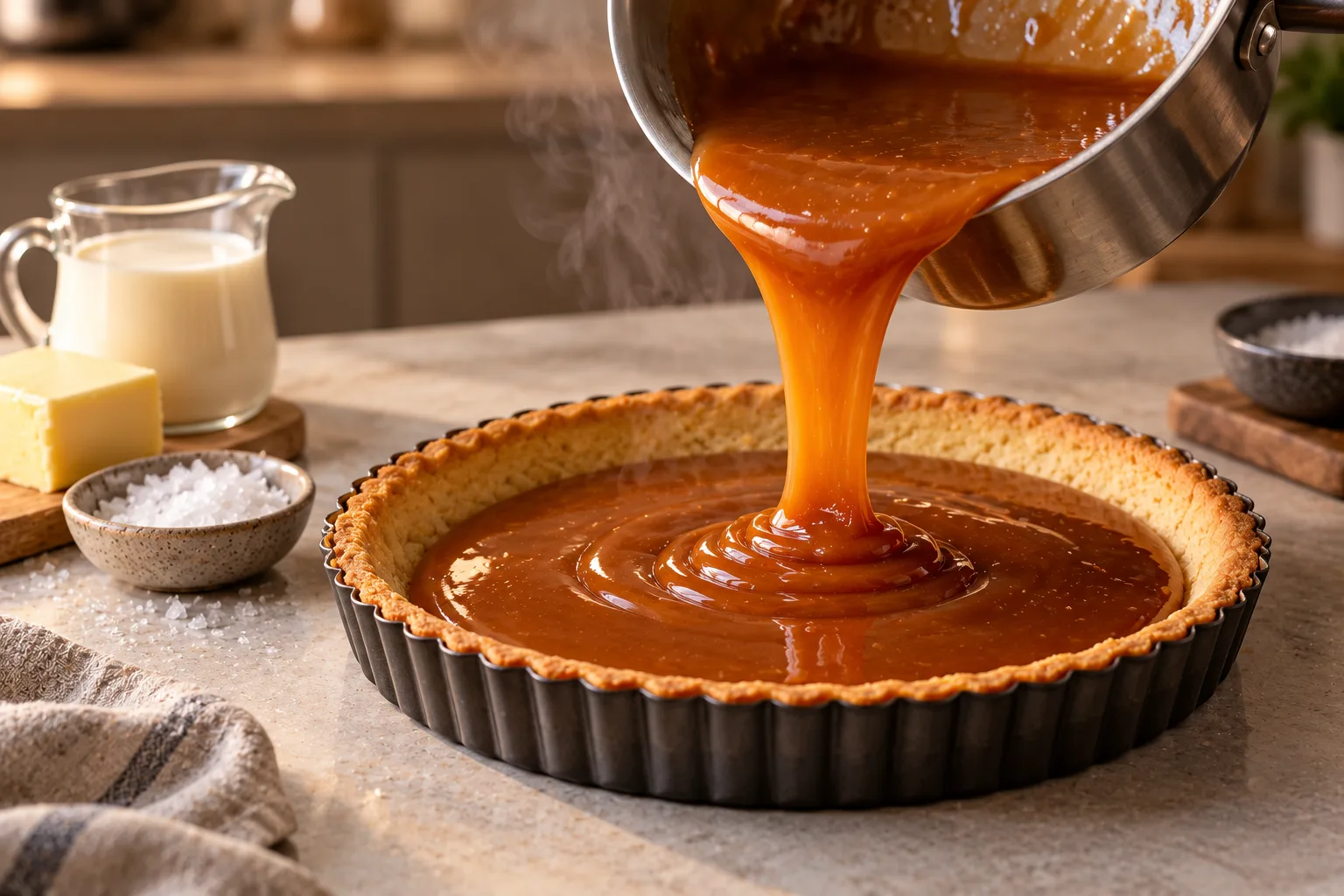
The mix will bubble up and steam a lot, so stand back. Cool slightly and pour it into the tart shell, then chill until firm.
Step 3: Pour the Chocolate Ganache
Heat about 200 ml cream until just steaming and pour over 200 g chopped dark chocolate. Wait a minute, then stir until glossy and smooth.
Pour it over the set caramel layer and tap the tin to level it.
Step 4: Chill and Finish With Salt
Chill for at least 2 to 3 hours, or overnight. Just before serving, sprinkle a pinch of flaky sea salt on top.
Add the salt at the end. If it sits too long on the ganache, it can dissolve and lose its crunch.
Eggless Chocolate Caramel Tart Options for India
An eggless chocolate caramel tart is easy, because the caramel and ganache already contain no eggs. Only the pastry needs a small change.
Here are a few eggless swaps that work well:
Biscuit base: crushed digestive, Marie or chocolate cookies with melted butter, no baking needed
Eggless shortcrust: flour, butter, powdered sugar and a spoonful of cold milk or water to bind
Vegan version: use coconut cream in the caramel and ganache, and a plant-based butter
Eggless desserts are in high demand across Indian home bakeries, so an eggless chocolate caramel tart is a great fit for anyone baking to order in cities like Bengaluru, Hyderabad or Ahmedabad.
How to Serve and Store a Chocolate Caramel Tart
Serve a chocolate caramel tart slightly chilled, about 15 to 20 minutes out of the fridge, so the caramel softens and the ganache is silky. Store it covered in the fridge for up to 3 to 4 days.
In hot and humid Indian weather, keep it refrigerated and do not leave it out for long. The ganache can melt and the caramel can turn runny.
Serving Ideas
A scoop of vanilla ice cream or a spoon of lightly whipped cream
Fresh berries or a few orange segments to cut the richness
A strong filter coffee or espresso on the side
Use a hot, dry knife for clean chocolate caramel tart slices. Wipe the blade between each cut.
Frequently Asked Questions
Why do salted caramel and chocolate go together?
Salt reduces bitterness and makes sweetness stand out, so chocolate tastes smoother and caramel tastes richer. Both also share toasty, roasted flavours from cooking.
Who invented salted caramel?
French chocolatier Henri Le Roux created salted butter caramel in Quiberon, Brittany, in 1977. He trademarked the name CBS (Caramel au Beurre Salé) in 1981.
What chocolate is best for a chocolate caramel tart?
Dark chocolate with 55 to 70 percent cocoa works best. It balances the sweetness of caramel without tasting too bitter.
Can I make a chocolate caramel tart without eggs?
Yes. The caramel and ganache are already egg-free, and you can use a biscuit base or an eggless shortcrust for the shell.
How long does a chocolate caramel tart last?
It stays fresh for about 3 to 4 days in the fridge, covered. Add the flaky salt just before serving.
Why did my caramel turn hard or grainy?
Caramel turns hard if it is cooked too long, and grainy if sugar crystals form while it cooks. Adding enough cream and avoiding stirring dry sugar early helps prevent both.
What salt is best for salted caramel?
Use fine sea salt inside the caramel and flaky sea salt on top. Flaky salt gives crunch and a clean salty pop.
Where can I buy a chocolate caramel tart in India?
Many artisan bakeries, patisseries and home bakers in cities like Bengaluru, Mumbai, Delhi and Pune offer it. Searching "chocolate caramel tart near me" and checking recent reviews is the easiest way to find a good one.
Final Thoughts: A Small Slice of Balance
A chocolate caramel tart is proof that the best desserts are about balance. Salt calms the bitterness, caramel adds warmth, and chocolate brings depth.
Whether you bake your chocolate caramel tart at home or pick one up from your favourite local bakery, take a small slice, let it soften a little, and enjoy how each layer plays off the next.
Visit Dyu Art Cafe in Koramangala
Specialty coffee, all-day breakfast and art on every wall. Open daily 10 AM to 10:30 PM in Koramangala 5th Block.
Get directions & contact